REVIEW – LIGHT + BUILDING 2026
Transformation for the future
Walking through the halls of Light + Building 2026, it quickly became clear that building technology is increasingly becoming the focus of the event. This trend was already apparent in 2024, when numerous well-known manufacturers of decorative lighting stayed away from Frankfurt am Main and instead showcased their products at Euroluce in Milan. Those familiar with the atmosphere of the lighting halls of yesteryear may regret this. At the same time, the technical expertise that urgently needs more investment in view of the shortage of skilled workers and resources became all the more apparent. Change always has many facets, so it is worth visiting Light + Building with an open mind and without nostalgia, because despite all the crises, the industry is working flat out to upgrade its offerings for the future. And that means first and foremost: simplifying processes, designing systems to be compact and flexible, and focusing on the essentials. Products should be as efficient, space-saving, repairable and timeless in design as possible. Surprisingly, the topic of sustainability, which has been largely dismissed as a short-lived trend by numerous companies over the past two years in the face of ever-new global crises, made a soft comeback at the stands.
Georg Bechter Licht presented the ‘System Dot 28’, which has received Cradle to Cradle Gold certification, can be installed more quickly and offers a new range of aesthetic options. ‘For us, Cradle to Cradle is not just a label, but an attitude: more intensive consideration, functioning cycles, less waste,’ said Georg Bechter Licht. Siedle connects devices, electricians, residents and administrators for building control with the IQ product family, which consists of a cloud-based platform, digital services and an IP-based video intercom system. Many tasks, such as those in large residential complexes, can thus be performed remotely. The user interface has been optimised with Siedle IQ Touch to make it more intuitive to use. Siedle's servers are located in Europe. ‘The most important development goal of IQ is to make life easier for all users, simplify work and streamline processes. This is particularly true for professional use in the housing industry. Operating large residential complexes requires low-maintenance technology with a good price-performance ratio that can be relied on for years to come,’ says Peter Strobel, Managing Director of Market and Innovation at Siedle.
The topic of optimising existing infrastructure was addressed at many stands: the Gira 2-wire IP converter, expected to be available from January 2027, enables the migration of existing door communication systems to the IP world without the need for new cabling. The retrofittable digital door communication system continues to use the existing 2-wire cables for data and PoE power supply, eliminating the need for conversion work. Thorn Lighting, a technology company of the Zumtobel Group, in cooperation with its sister brand Tridonic, presented ‘airASPECT’ – a new family of environmental sensors for applications measuring indoor environmental quality. The sensor enables cost-effective measurement of temperature, humidity, air pressure, air quality index and CO2 throughout the building. Trilux offers the LiveLink Bluetooth NLC Gateway radio extension for the uncomplicated smartification of existing buildings, making it possible for the first time to combine wired DALI networks and wireless radio networks into a hybrid system. Commissioning is carried out via the LiveLink ONE app. With its ‘MIXIT’ energy efficiency solution, Grundfos combines all mixing circuit components in an intelligent plug-and-play system, reducing the effort required for installation and commissioning. Automatic system adjustment saves up to 25 per cent energy, while the new supply source setpoint function opens up further optimisation potential. The focus on circular economy also reduces waste. The development was honoured with the Designplus Award by Light + Building.
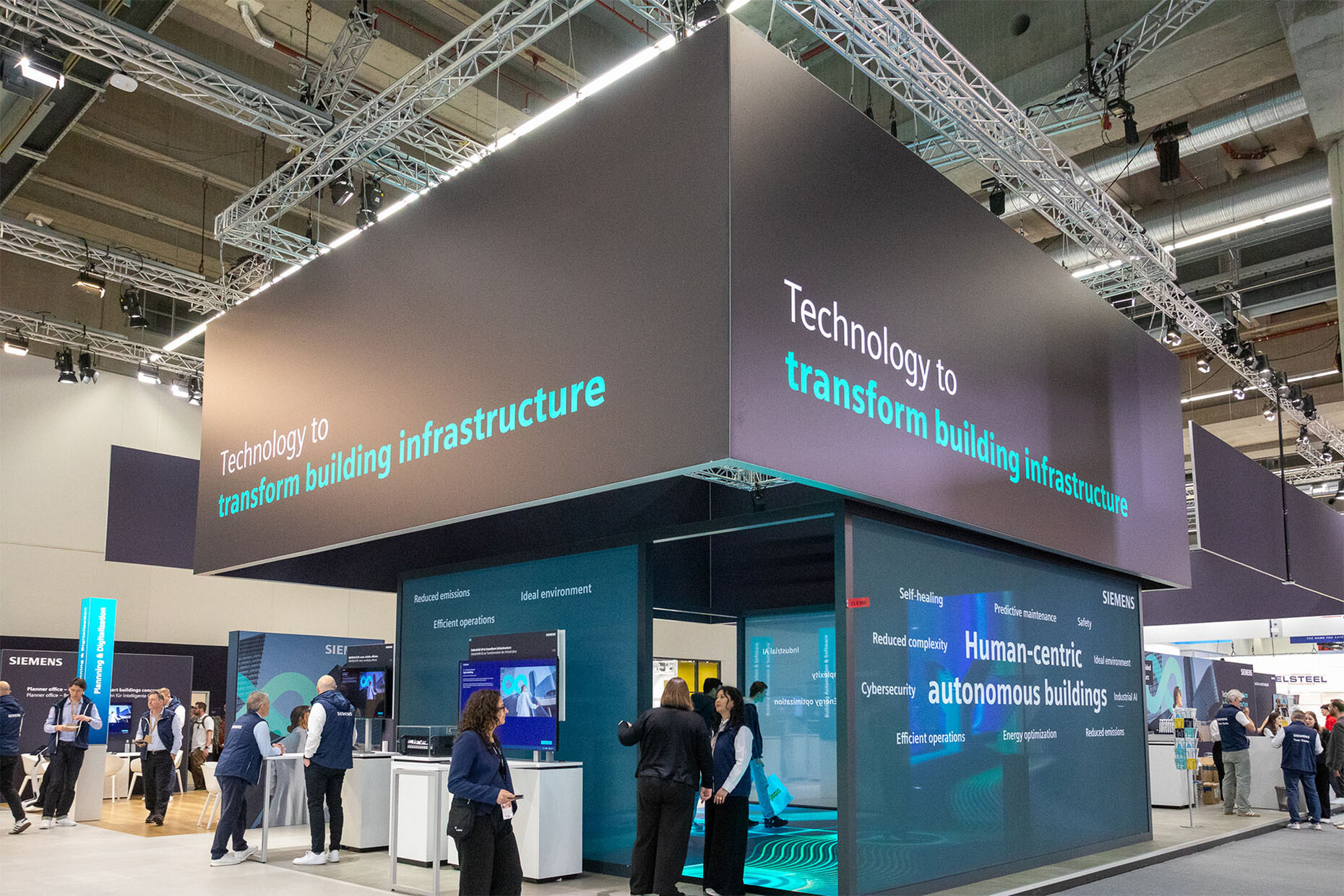
Simple, energy-efficient and smart is the motto. In this context, industrial AI is emerging here and there as a process optimiser, particularly at Siemens. The company is working on launching the ‘Human Centric Autonomous Building’, which offers optimised operation for users and operators. Autonomous buildings represent the next stage of development in building operation, and Siemens is designing them with an integrated approach that combines building technologies and electrification throughout the entire building life cycle. The aim is to increase the efficiency and long-term value of the building. In addition, Siemens has introduced a recyclable soft starter. According to the company, the lower resource consumption reduces CO2 emissions by up to 50 per cent compared to a new device. The process is transparently documented using environmental product declarations (EPDs). ‘With our refurbished SIRIUS 3RW5 -Z R11 soft starter, customers receive a completely overhauled product that performs as well as a new one and is a reliable and environmentally friendly alternative,’ says Andreas Matthé, CEO Electrical Products at Siemens Smart Infrastructure. Furthermore, the approach and evaluation methodology of the in-house ‘ecoTech’ label, an environmental declaration for Siemens products based on product-specific assessments of sustainability-related KPIs, is currently being externally validated by TÜV Rheinland in accordance with ISO standards 14020 and 14021.
With its ‘Matrix’ concept study, Zumtobel is researching the option of combining different technologies in a single luminaire in order to adapt lighting specifically and in real time to changing activities. To this end, sensors identify specific objects and activities in the work area; artificial intelligence (AI) evaluates the activity patterns and immediately adapts the lighting mood and energy consumption to the new requirements.
A powerful component for modern energy distribution that can be seamlessly integrated is demonstrated by ‘ABB SACE Emax 3’: the first cyber-secure open low-voltage circuit breaker that combines secure grid connection with intelligent technology. The product was honoured with the Designplus Award by Light + Building, which was co-presented by Stylepark. Mennekes also received a Designplus Award for ‘ONE’, a plug-and-play IoT ecosystem that accelerates processes and creates transparency in industrial energy distribution. The integrated sensor technology sends operating data directly to the Industrial Cloud, where it can be visualised via service modules, integrated into external systems and used to calculate the carbon footprint for each production step. Wago is also expanding its modular building automation system, which consists of engineering software, application solutions and automation hardware, to include a comprehensive management and operating facility (MBE) and integrating it into the new Wago Building Ecosystem.
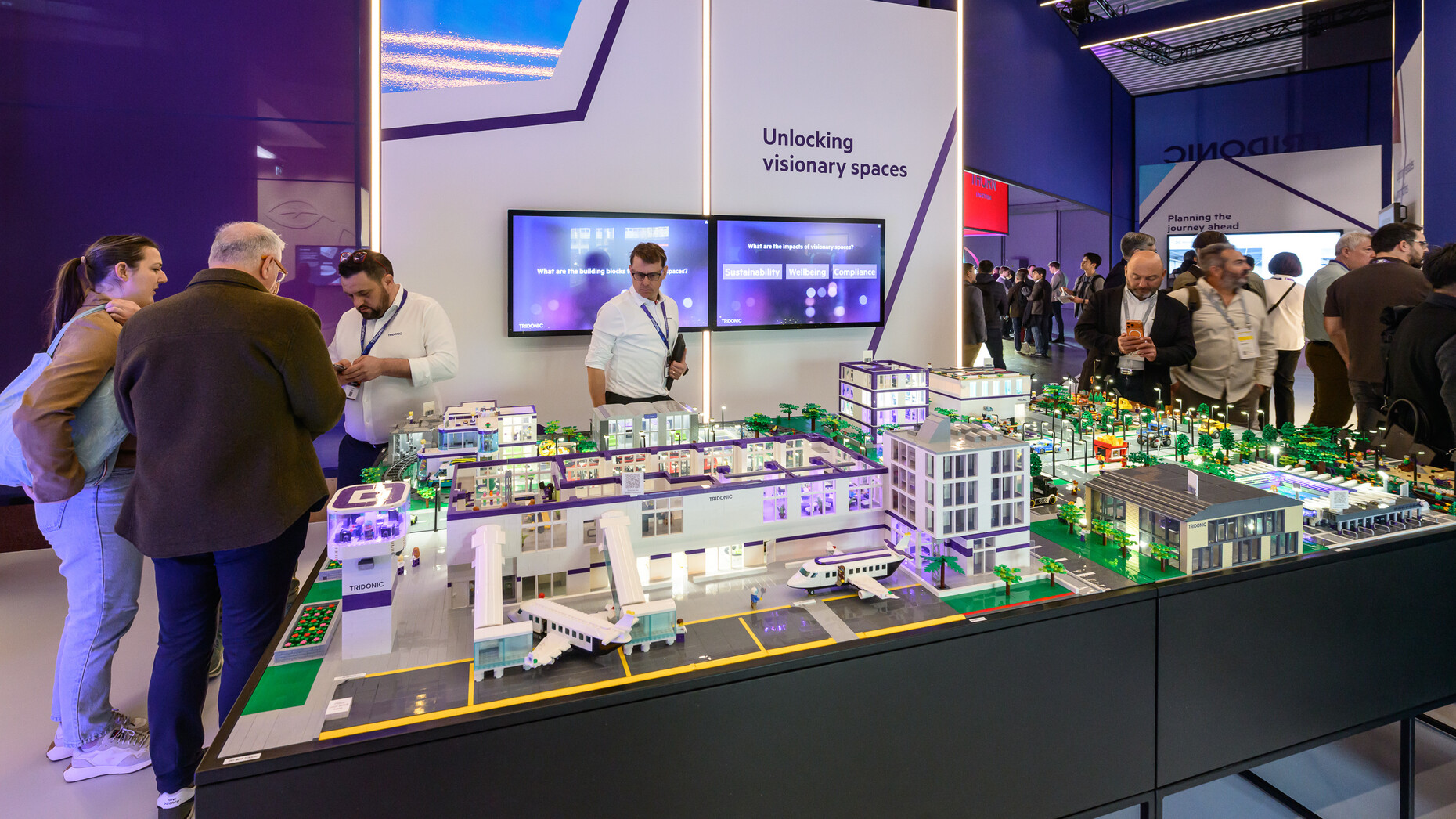
Zumtobel is the first lighting manufacturer to launch a standardised remanufacturing service that extends the service life of lighting systems to at least two product life cycles. The all-inclusive package is designed to relieve companies of the burden of the process, from the de-installation of used luminaires to industrial reprocessing and quality controls to re-installation. The agreement for remanufacturing, including regular maintenance and annual inspection of the lighting systems, can now be concluded when purchasing selected luminaires from the Tecton II, Vivo II, Panos III, Craft II and Factor II series. "Our remanufacturing service addresses the needs of customers, particularly in stationary retail, logistics and production. It leads to lower total operating costs, less resource consumption and emissions, and increased performance thanks to regular technological updates," says Alexandru Zloteanu, Innovation Manager at Zumtobel. Tridonic also offers services that cover the entire life cycle of a project, such as sensor technology, integrated system integration and AI-supported evaluations. The data from the lighting infrastructure is thus made available for predictive maintenance, renovation planning and operational optimisation. ‘We are entering a phase in which light is becoming an active component of digital architecture,’ says Hugo Rohner, CEO of Tridonic.
Efficient control, analysis and monitoring in building automation systems is also important in view of the stricter requirements imposed by the EU, which sets standards for new and existing buildings in its Energy Performance of Buildings Directive (EPBD). However, the deadline for implementation, set for May 2026, is ambitious: ‘Realistically, this will be almost impossible to achieve,’ says Dr Peter Hug, Managing Director of the Building Automation Association within the VDMA, in an interview with Stylepark for the Building.Technology.Solutions platform of Messe Frankfurt AG. Furthermore, according to him, AI will primarily shape two areas in the future: "Machine learning based on long data series – here, AI can learn from historical data and thus make building operations more efficient. In addition, predictive maintenance: if a large number of data points are available and a system is not running optimally or fails, AI can retrospectively identify causes – and even predict them before damage occurs. This is precisely where the great added value over classic algorithms lies. Predictive maintenance can thus be raised to a new level of quality."
A new level of transparency is required to make process efficiency measurable. Similarly, a wide range of products is needed to achieve predictability that conveys security. The systems presented at Light + Building ranged from applications of various sizes, whether for infrastructure, building operation or meeting room availability in the workplace. Esave developed ‘SLC-Motion203-C’, an intelligent all-in-one controller for outdoor lighting with environmental, brightness and motion sensors. This reduces light pollution, offers global connectivity and mesh networks, and combines motion detectors and controls in a Zhaga-compatible device. The idea was honoured with the Designplus Award. On the subject of efficient space utilisation in the office, LIZ, a subsidiary of Waldmann, presented a smart office platform that offers data-based space control and individual workplace and room utilisation for companies of all sizes. The benefits of smart systems in the home could be explored in the ZVEH's E-House.
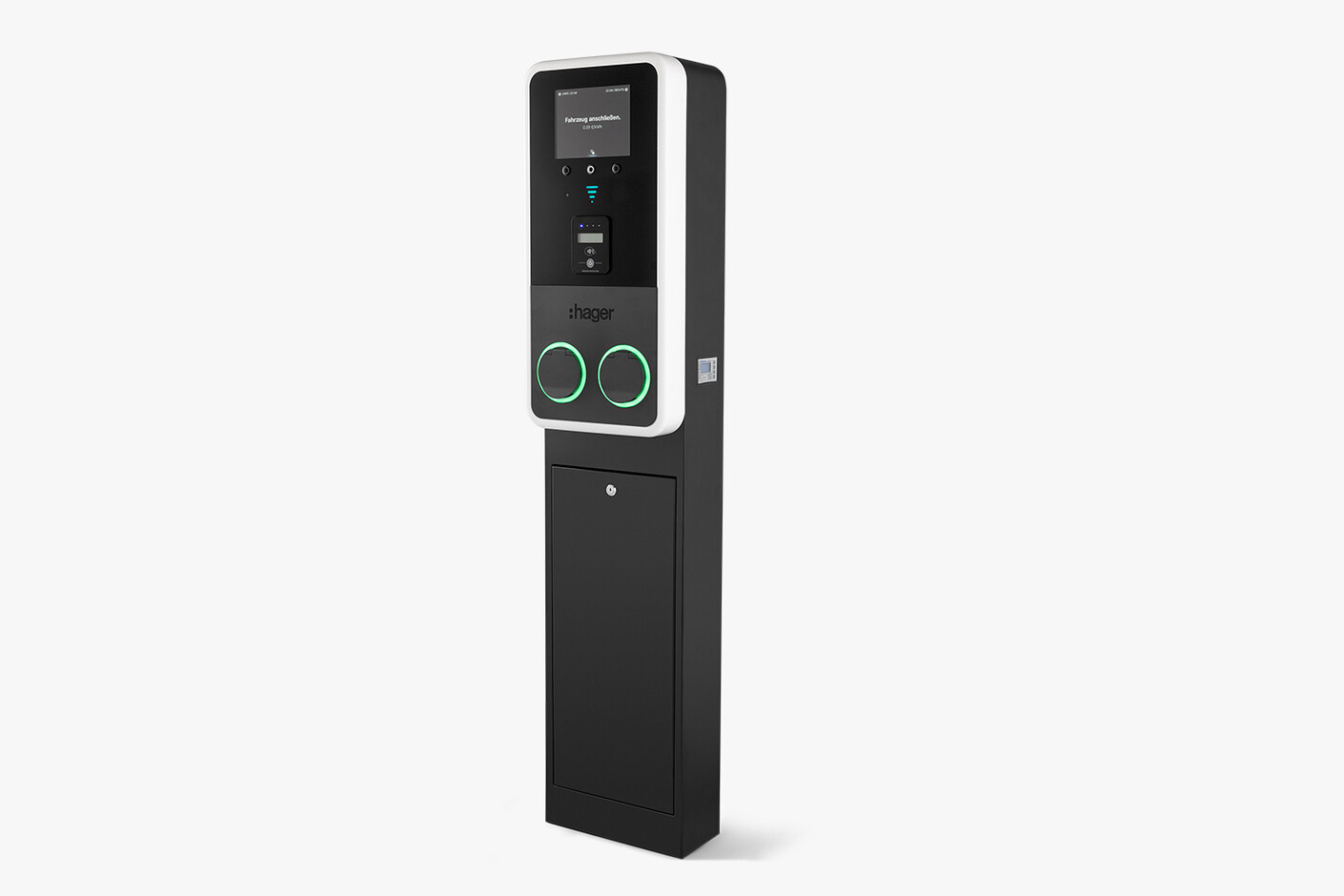
The electric car as a key component in decarbonisation has attracted greater attention due to the current oil price shock in the wake of the Middle East conflict. Among other things, Schneider Electric showcased modular solutions for the mobility transition with charging infrastructure and load management, such as the ‘Canalis’ busbar system and the ‘ecorealEV’ charging infrastructure planner. At the Hager stand, visitors could explore ‘witty park 2’, an intuitive charging station with two 22 kW charging points that can be used as a twin wallbox or a free-standing duo charging column. A single supply line, simple installation and quick commissioning are designed to reduce effort and complexity. Operation can be monitored remotely via LAN or LTE, and OCPP compatibility ensures future-proofing. The charging station was awarded the Designplus Award by Light + Building. Bega, for example, showcased a charging unit for electric vehicles that can be retrofitted to lighting columns.
Nature and technology
In the field of lighting systems and luminaires, exhibitors at Light + Building focused on the further development of existing systems. Nevertheless, there were a few trends to be discovered in terms of materials and design language: alabaster luminaire bodies were on display in the form of the ‘Equinox’ pendant luminaires from Belux and ‘ARE M PD’ from Molto Luce, as well as in several collections from Bert Frank. Nordlux presented a slim wooden body with fine brass details encasing dimmable LEDs with high colour rendering in its ‘AKENO pendant luminaire’ by Bjørn + Balle, which won the Designplus Award by Light + Building. Meanwhile, Ties Westerhuis designed the three-legged ‘VIVAA.free Woodshade’ floor lamp with integrated daylight simulation for Waldmann, which is made of dark ash and has a lamp head with a vertical grid structure. With its ‘°bloc’ collections, Eden design offers the option of combining the luminaires with natural materials such as marble, wood, brass or a material of your choice. The basis for the combination is a standard rail, to which the blocks are attached with clips or adapters.
Patrick Jouin ID designed ‘NODE’ in three sizes for the Hoël brand Securlite, a robust outdoor luminaire made of aluminium that surprises with a bamboo lamp head. "With NODE, we did not want a separation between nature and technology, but a dialogue. By integrating wood at the very core of the project, not as decoration but as the material that hosts the technology itself.‘ says Patrick Jouin. Dexter Lighting strives for symbiosis with the natural environment with ’Aurora", an outdoor luminaire that resembles a tall, brown mushroom. It can be placed flexibly and adjusted in height. The LED module, which provides downward-facing, glare-free light, can be replaced as needed. Pedrobeat Lighting Company / Lightholm presented new approaches to outdoor lighting with its ‘GEO Streetlight’: thanks to the replaceable rear cover and modular design, low-maintenance upgrades and easy replacement of driver and control elements are possible. ‘In combination with adaptive lighting technology and full smart city compatibility, “GEO Streetlight” provides a strong impetus for efficient, durable and ecological urban lighting,’ said the Designplus Award jury.
Luminaires with a minimalist aesthetic that remain in the background but still impress with their performance and design – it was interesting to explore the further development of ‘Vergo’ by Kreon, made from 3D sand printing, and the ‘Calm Line’ collection by Bega. The latter was recently supplemented by a dimmable, flexible table lamp, whose cast aluminium housing is available in different colours. The donut-shaped cover is made of opal white, translucent plastic. In addition to the numerous linear systems designed to serve as architectural tools, this organic, soft shape was increasingly in demand. In terms of lighting technology, materiality and aesthetics, ‘Don’ by Serien Lighting, made of hand-blown glass, is the company's flattest wall and ceiling light to date. Another exciting development is ‘Slice2 PI’, which is equipped with an expanded metal mesh that directs the light and thus functions as a wall light.
When developing new glass luminaires, preference was given to ribbed or otherwise textured surfaces, as in the case of Ideallux's ‘Bloom’ collection: the outer shell of amber glass in the shape of a hemisphere surrounds an inner sphere of frosted glass, which creates a soft, diffuse lighting effect. Tonone combined traditional craftsmanship in the production of leaded glass with modern LED technology for the prototype of the ‘Razer’ pendant light. The slight irregularities and glass inclusions resulting from the handcrafting process contribute to the unique charm of the luminaire.
With ‘The Editions’, Austrian luminaire manufacturer Zumtobel presents a series of lighting solutions developed in collaboration with international architecture and design firms. The luminaires in the series are suitable for a variety of room situations in which light is required to perform infrastructural functions, enable individual control and precisely balance visual quality. Whether as the free-standing workplace luminaire ‘Skena’, the linear pendant luminaire ‘Izura’, the tubular luminaire “Solena” or the compact table luminaire ‘Taluna’. The new editions are the result of very different collaborations: examples include the large-scale architectural project for the Hortus office building by Herzog & de Meuron, for which the ‘Solena’ luminaires were developed, and an intensive design phase for the visionary ‘Skena’ workplace luminaire with the Hamburg-based firm BAID Architektur.
In addition to further developments of iconic classics, Stilnovo presented, among other things, the ‘Papylia’ collection by Giuseppe Maurizio Scutellà, whose glass surfaces are arranged around a rod-shaped core. The flower-like discs are decorated with fine lines, while the light source itself remains hidden. The dynamic structure creates an exciting visual effect that gives the luminaire a sculptural character. Also on display at the stand was ‘Fronda’ by Pio & Tito Toso, a multi-level, modular pendant lamp with branched arms that translates the basic structure of a chandelier into a floral-looking form with diffused light. W+, the evolution of Wästberg, a brand of the XAL Group, showcased the minimalist ‘Cast’ lamps by Foster+Partners, among other things. Maytoni invited visitors to interact with its ‘Evolution’ series: the two flower-shaped lampshades in subtle colours can be rotated, offering the option of individually adjusting the appearance of the lamp and the lighting characteristics. The matt diffusers in combination with LED technology provide a soft, glare-free light.
In the field of rail systems, the rapid replacement of a wide variety of light modules is becoming increasingly important, a requirement that O/M meets with ‘Sys’. The light modules can be quickly plugged in and moved on the modular low-voltage rail system. With ‘LINEDO 50’ with MES – MultiLumen Easy Select, RZB is introducing a new, slim light band system in which the MultiLumen level is set via the light or safety switch. The device carrier and mounting rail form a ready-to-install unit. In addition to simplification, the design is also sustainable: The slim extruded profile of the ‘Enviva’ luminaire from XAL is made of hydro low-carbon aluminium in Europe and offers clearly separable components that are not glued, can be dismantled without tools and are fully recyclable. The Reutlingen u-wire rope holder ‘Type 0’ made of nickel-plated brass is also suitable for mounting that is as invisible as possible: With a height of only 7.5 millimetres and a diameter of 6 millimetres, it is tiny and can be used for stainless steel cables with a diameter of 0.45 to 0.63 millimetres. The construction can support up to three kilograms. Among other things, Ridi presented the new LYV light profile: The aluminium profile, available in two sizes, can be used to configure a wide range of individual luminaires and structures tailored to the room, whether for applications in offices, educational settings or prestigious, multifunctional rooms. Even with slim profile widths, the lighting is uniform and efficient. The connection between the profiles is barely visible – the lighting appears fluid and the corners seamless.
A warm glow
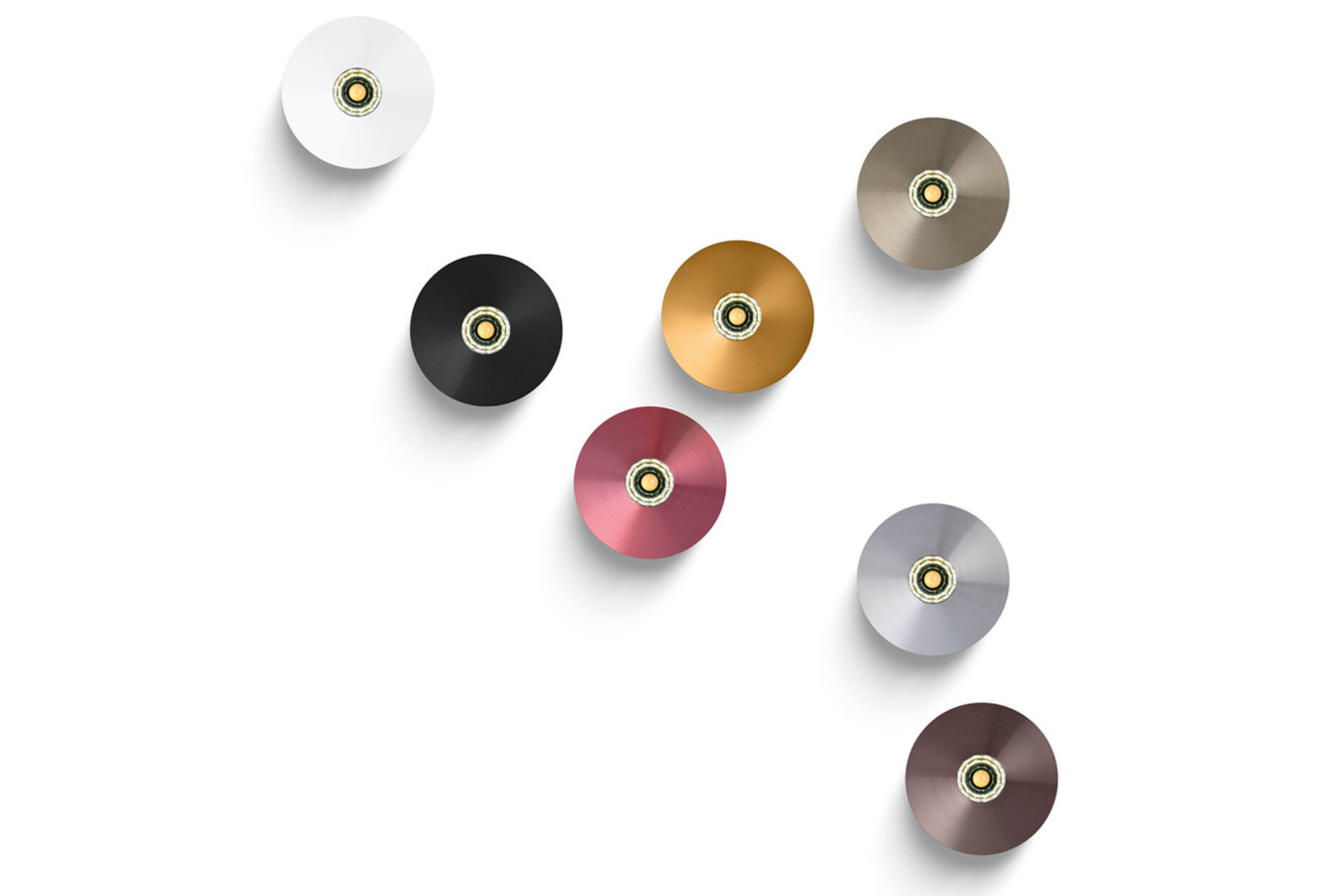
Antique brass and dark bronze shimmered with iridescent reflections as an elegant detail on many stands: in addition to the aforementioned ‘Akura’ luminaire from Nordlux, the new ‘SC Invader Model 1 Trimless’ spotlight from Prolicht's Studio Collection was also finished in this way. Bega is adding square, flush-mounted recessed floor lights made of ‘Bega ThermoBrass’ to its range for installation without visible transitions. The material is corrosion-resistant, robust and heat-conductive, impressing both in terms of function and appearance. The trend towards brass was even more evident in switches: together with Dornbracht, a manufacturer of high-quality fittings and luxurious bathroom furnishings, material and manufacturing expertise were combined to offer a joint real metal surface for switches and fittings for the first time. A warm bronze tone was presented at the launch at Light + Building. The brushed real metal surface visually and haptically connects Jung's switch ranges and Dornbracht's fittings. The development of the surfaces and the finishing of all products takes place at Dornbracht. With the burnished and hand-finished antique brass surface, Jung is adding a high-quality real metal variant to its LS 1912 retro-look toggle switch range.
Hager also showed itself to be open to new approaches: the building technology expert has developed four design lines that are universally applicable and can be easily connected to existing installations. These will be available from May this year, and from October 2026, the switch system will be expanded to include the Signature range with 16 additional colours for all design lines and 15 materials, such as wood, stone, slate and marble for A.8 and C.8. The web-based design assistant ‘Style Hub’ translates design ideas into specific product combinations to simplify planning. The switches can be visualised in various colours and designs, viewed against different backgrounds and shared as a design ID for project partners, including direct export to Hager Ready or the order assistant. With the ‘Style Engine’, uploaded room views can be analysed using AI and suitable recommendations generated. The reason for Hager's clearer and more concise presentation this year was that the Berker switch brand, founded in 1919 and part of the Hager Group since 2010, is being merged into the Hager brand. Hager will continue to offer the round Berker design classics from the 1930, Glass and R.classic series, as well as the IP55 surface-mounted switch W.1.
Basalte presented the angular ‘Matisse’ switch series, named after the painter Henri Matisse. While the delicate buttons are available in chrome, gold or black, the switch surface can be selected in a variety of colours. The functional elegance of the ‘Miro Pro’ remote control for Basalte Home was recognised by the jury of the Designplus Award by Light + Building, which also included Stylepark. Simes' presentation perfectly covered the ‘bronze’ and “multifunctional” trends: every luminaire in the ‘Bronze collection’ is made of solid BRAL, an aluminium-bronze alloy with exceptional outdoor durability. The new outdoor luminaires ‘Shift Pro’, ‘Any-Way’, ‘Field’ and “Pointer” offer the possibility of combining functions and, as in the case of ‘Shift Pro’, transforming the mast into an integrated platform that combines lighting, security, sound transmission and connectivity in a single vertical element.
Event Fair
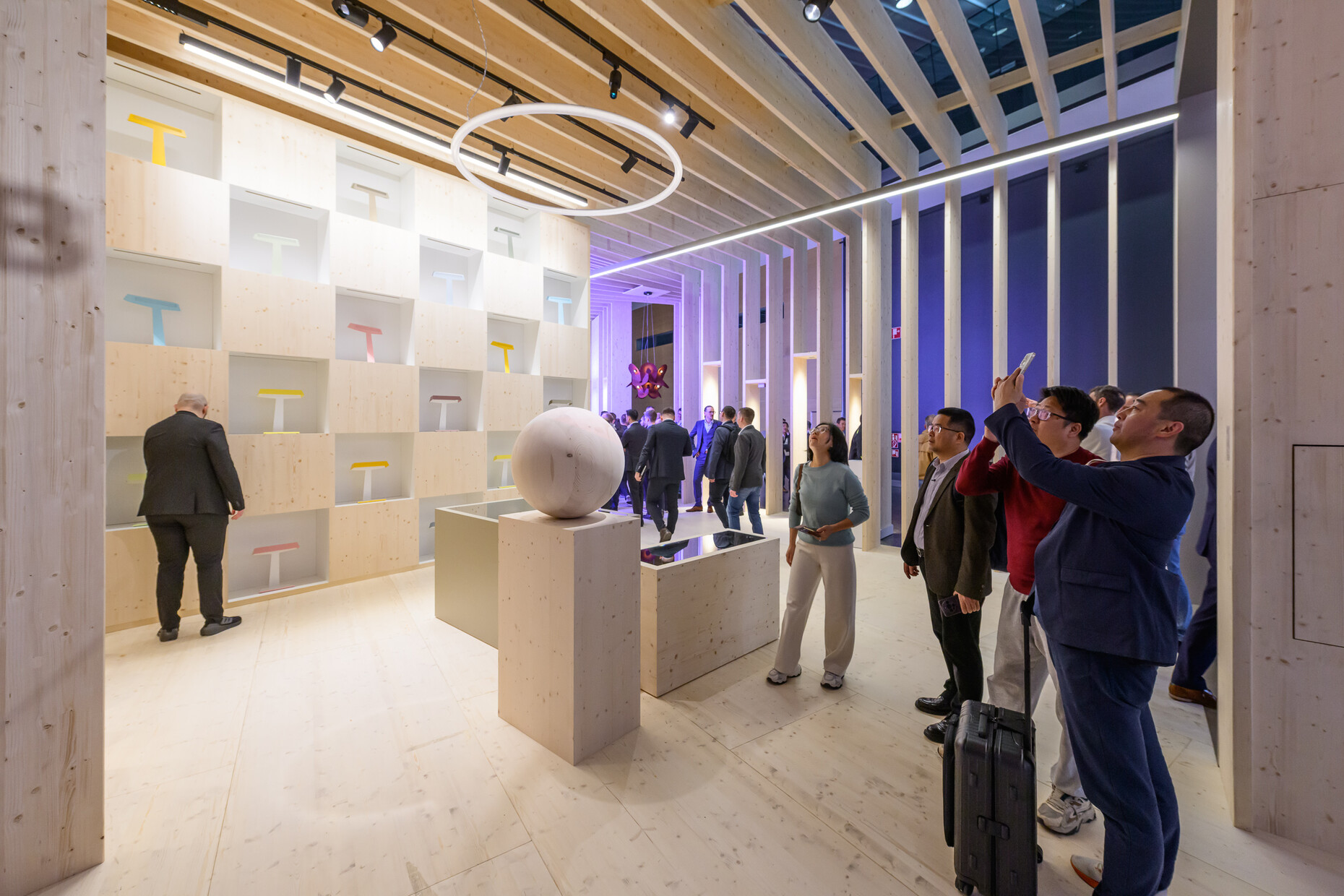
This year, manufacturers' stand concepts offered a varied mix, but unfortunately, consistently sustainable designs were rare. It was therefore all the more pleasing that Zumtobel presented a prime example in Forum 0 of what environmentally friendly exhibition stand construction can look like, combining functionality with visual appeal: For the second time, the Zumtobel Group was awarded the ‘Sustainable Exhibition Stand Award’ by the jury of the Designplus Award by Light + Building for its sustainable stand concept. The concept is expressed through an inviting design with selected materials such as wood and textiles, and puts people at the centre. The modular architecture allows up to 90 per cent of the materials to be reused.
Inspired by the Japanese art of origami, Ridi opted for space-creating elements: the presentation boxes and walls are transported in a compact form and configured in the room. The fabric-covered rear walls and the information panels on the inside of the boxes can also be redesigned. ‘The twelve Ridi origami boxes for Light + Building 2026 will be integrated into RIDI's long-term event concept after the trade fair,’ says Tim Leinberger, Chief Sales Officer. As in 2024, Wever & Ducré used scaffolding to suspend the lights and fitted the stand with a neon orange floor, from which the counter and seating cubes in the same colour appeared to grow. The club-like atmosphere under the neon sign ‘Life is too short for boring lighting’ came to life in the evening with a DJ. Lightnet offered a light installation by Playmodes Studio, an audiovisual artist duo from Barcelona who explore the dialogue between light, movement and code. Signify, in cooperation with Mercedes, placed a Formula 1 racing car on its stand and offered visitors the opportunity to drive the Las Vegas street circuit in an F1 simulator. The US-based Wac Group promised a ‘complete experience’ and impressively demonstrated that it meant business: in addition to presenting its products, the layout was designed entirely around the visitor experience. For the presentation of the luminaires, a detailed environment was created for each one, from a shop to a small bakery to a retail outlet – while a metre-high light sculpture rotated in the centre.
In addition to the companies' exhibitions, there were many interactive activities to explore at the exhibition centre: from the PowerFestival and the workshop street for young visitors to the ZVEH hot-air balloon in the Agora. The kick-off event for ‘ElektroHeldinnen’ (Electrical Heroines), timed to coincide with International Women's Day on 8 March, signalled the promotion of cooperation within the industry, with women and men working together to create a strong, diverse and future-oriented electrical industry. Similarly, the Women in Lighting initiative highlighted female perspectives in lighting design. Meanwhile, the Design Plaza has established itself as the central meeting point at Light + Building, where many tours start and talks and award ceremonies take place. Incidentally, the style agency bora.herke.palmisano offers a good overview of the trends it has analysed for lighting design in 2026/27. Not far from the Design Plaza, visitors could explore Light + Building's new special exhibition ‘The Living Light’, developed by the lighting design agency Lichtvision Design under the direction of Carla Wilkins. Four thematic areas – ‘Home’, ‘Education’, “Workplace” and ‘Communication’ – showed how light provides orientation, creates atmosphere and facilitates exchange.
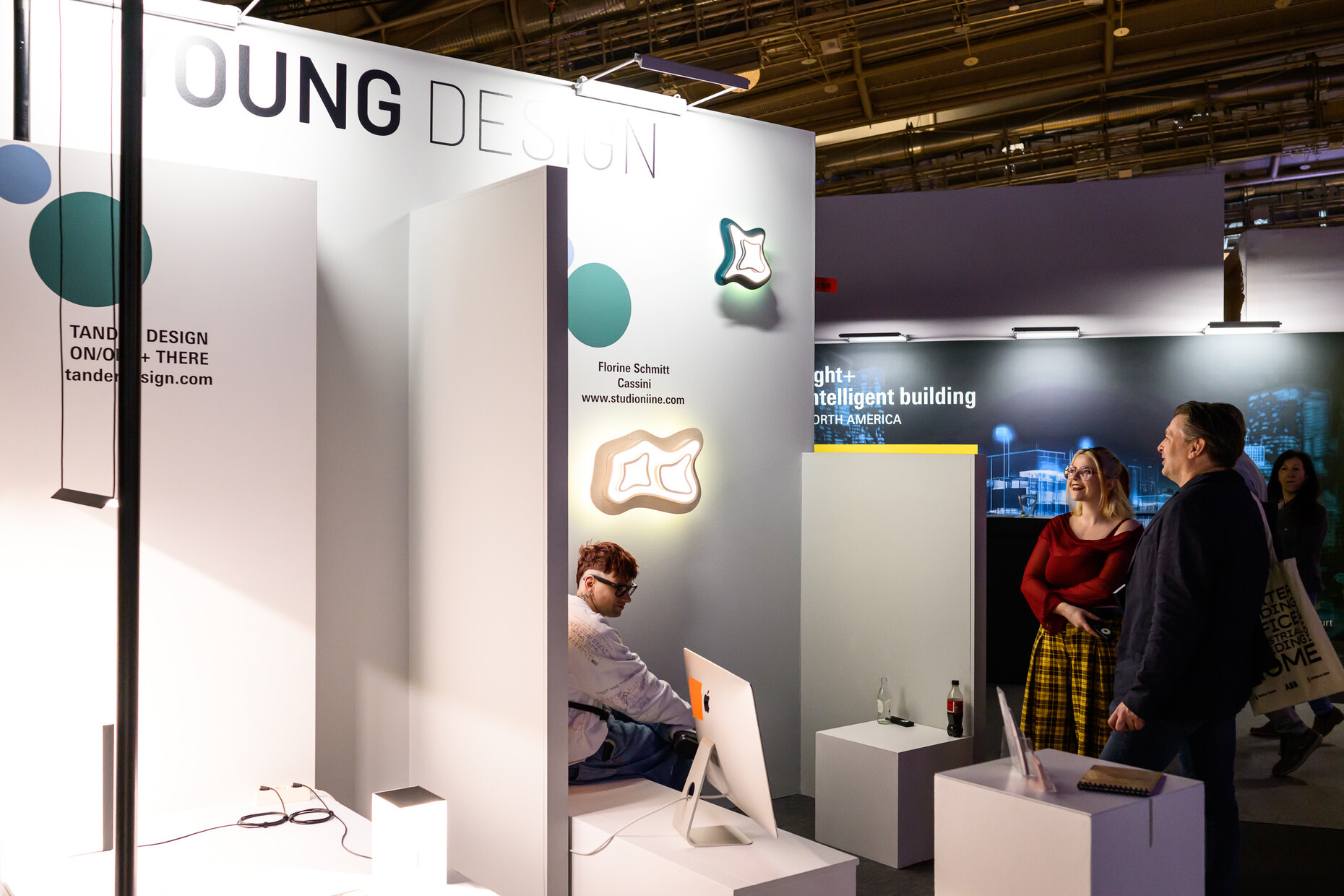
On the spacious grounds, young designers also had the opportunity to present their work free of charge at Light + Building in a prominent location – such as ‘Main Light’ by Tobias Trübenbacher and Andreas Lang. The pilot project is being realised at the Wesel shipyard as part of World Design Capital Frankfurt Rhine Main 2026. The lighting modules are powered by large-format, coloured, translucent solar films developed in cooperation with the manufacturer Asca. In combination with demand-based lighting control and innovative LED technology from ewo, this creates an energy-self-sufficient lighting infrastructure that is also suitable for shading. The renewable energy generation is deliberately made visible: the solar film is not a hidden technical component, but a central, colourful design element. The presentations on smart buildings at the BTGA (Bundesindustrieverband Technische Gebäudeausrüstung e. V.) forum were also exciting. In collaboration with Mainz University of Applied Sciences, a live presentation showcased a real-life smart building laboratory.
1.927 national and international exhibitors exhibited at Light + Building this year, compared to 2,169 companies in 2024. As a result, some halls appeared significantly thinner. Nevertheless, the high demand for future-proof energy and building technology remained unaffected. In discussions at the stands, it was repeatedly emphasised that in times when numerous global crises and advancing digitalisation are raising complex questions for planning, construction and operation processes, a common platform for exchange is essential, especially for European manufacturers. The industry is undergoing change and is reviewing its structures, partly out of necessity. It is encouraging to see that decarbonisation and the simplest possible upgrading of existing buildings are being re-examined in this context. The energy transition and resource scarcity, the tax burden, the constant shortage of skilled workers and the necessary investments in digitalisation are currently causing costs to skyrocket in many areas. Uncertainty about this development is encouraging weak domestic investment and a shift abroad. This makes it all the more important to take a holistic view of the electrification value chain and new ideas that have the potential to change those structures in the industry that are no longer sustainable.